
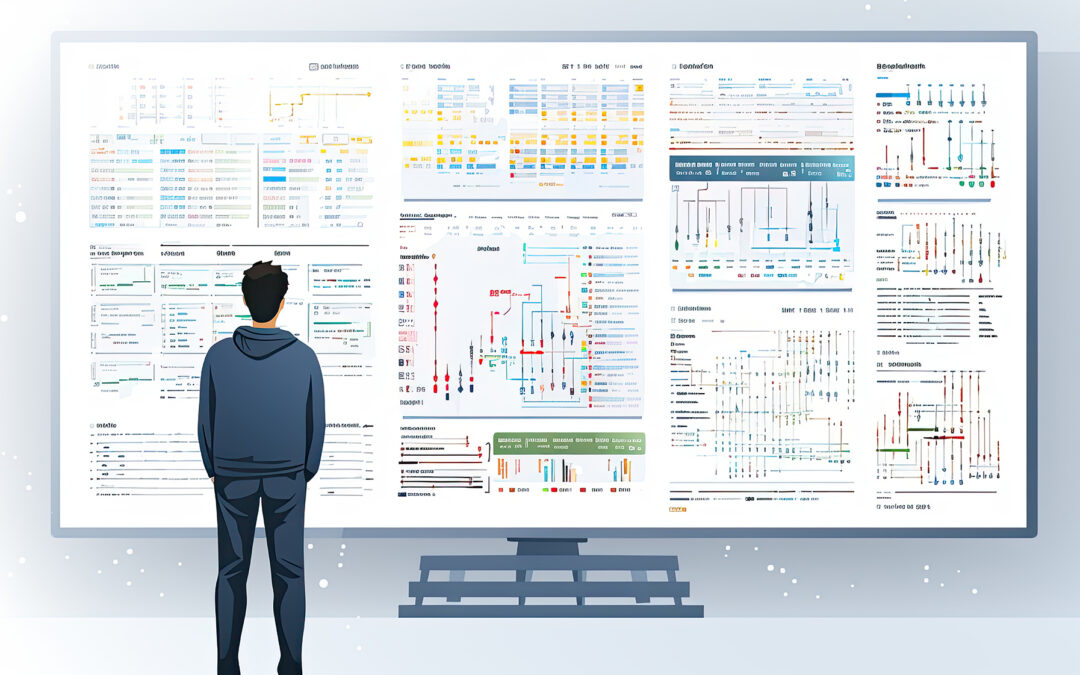
The conference room fell silent as the CEO stared at his laptop screen in disbelief.
“But… everything was green yesterday,” he whispered.
I was looking at the same dashboard. Forty-seven different metrics. Forty-seven green lights indicating “all systems normal.” Revenue trending up. Website traffic climbing. Social media followers, growing. Product releases on schedule.
And yet, his biggest client – representing 30% of annual revenue – had just sent a termination notice that morning.
“How did we miss this?” he asked.
The answer was hiding in plain sight. Or rather, it was drowning in a sea of meaningless numbers.
This ₹200 crore manufacturing company wasn’t suffering from lack of data. They were suffering from data obesity.
Their dashboard was like a car with 50 gauges but no speedometer, fuel gauge, or engine temperature warning. Lots of lights, lots of numbers, zero insight into what actually mattered.
While they were celebrating 10,000 new website visitors, they missed that customer satisfaction scores had been declining for three months. While they tracked 23 different production metrics, they overlooked that delivery times had stretched from 12 days to 19 days.
Their “green dashboard” was actually screaming warnings. They just couldn’t hear it over the noise.
Here’s what I’ve learned: The most dangerous dashboard is one that makes you feel good while your business slowly bleeds to death.
I’ve seen this pattern countless times. Smart leaders. Good intentions. Terrible metrics.
They track:
- How many emails Marketing sent (instead of how many quality leads they generated)
- How many features Engineering shipped (instead of how many customers actually use them)
- How many meetings Sales had (instead of how much pipeline they built)
I call these “vanity metrics” – they stroke your ego but don’t improve your business.
The brutal truth? Most dashboards are designed to make executives feel busy, not make businesses perform better.
So we stripped everything down. From 47 metrics to 5. Just five numbers that actually predicted business health:
- Customer Health Score (leading indicator of churn)
- On-time Delivery Rate (what customers actually care about)
- Quality Issue Resolution Time (customer satisfaction driver)
- Pipeline Velocity (sales predictability)
- Employee Net Promoter Score (team stability indicator)
That’s it. Five numbers that told the real story.
The transformation was remarkable:
Within 30 days, they caught a quality issue that would have cost them another major client. Their early warning system – that Customer Health Score – flagged the problem while there was still time to fix it.
Six months later:
- Customer retention improved from 78% to 96%
- On-time delivery jumped from 67% to 94%
- They recovered that “lost” client by demonstrating measurable improvements
- The CEO sleeps better (because his 5 metrics actually tell him the truth)
But here’s the real insight: They didn’t need more data. They needed better questions.
Instead of “What can we measure?” they asked “What do we need to know?”
Instead of “What looks good on a dashboard?” they asked “What predicts business failure?”
Instead of “What makes us feel productive?” they asked “What drives actual results?”
Research shows that companies using focused, strategic metrics outperform those tracking everything by 36% in profitability. The Balanced Scorecard framework emphasises this: measure what matters, not what’s measurable.
I’m curious: How many metrics are on your main dashboard right now? And if I asked you to predict your business performance six months from now using just those numbers, how confident would you be?
Because somewhere in your organisation, there’s probably a termination letter being written while your dashboard shows green lights.
The question isn’t whether you have enough data. The question is: Do you have the right data to see what’s really happening?
What story is your dashboard telling you? And more importantly – is it the truth?
Ready to cut through the noise and focus on what actually matters? Take our OPA and discover which metrics truly predict your business success.