Recently I was working with a CEO last month. Manufacturing company, good turnover, successful by all measures. But he said something that stuck with me: “Arjun, we’re doing well, but I feel like we’re always one step away from disaster.”
That’s when I explained the Default vs Design framework to him.
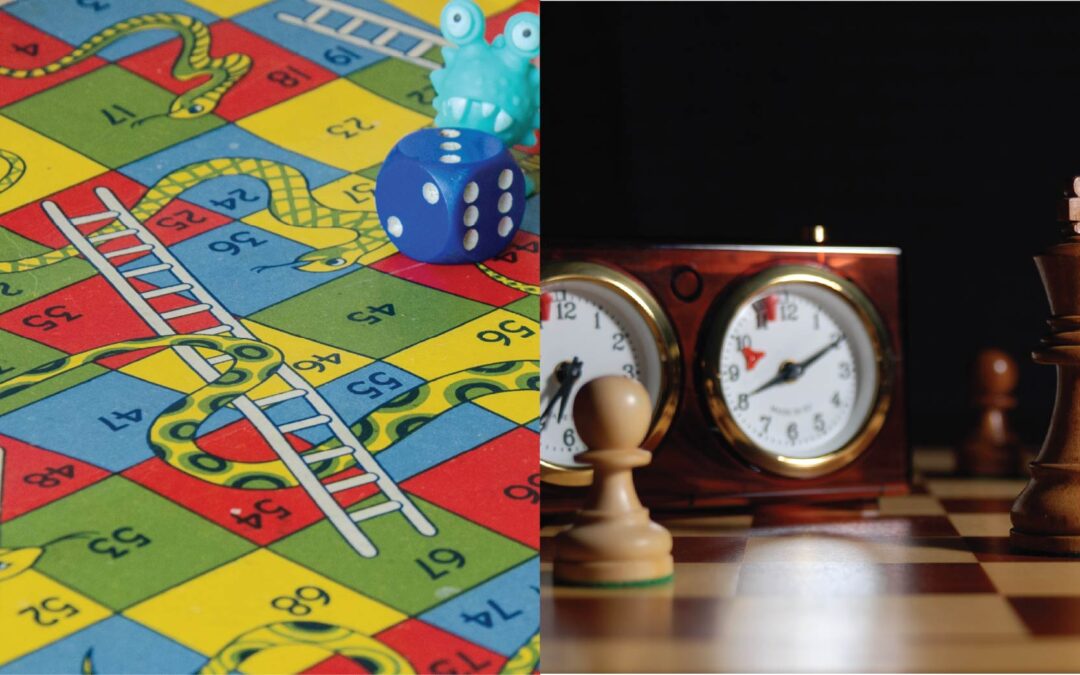
The point is: Most organizations today are playing Snakes & Ladders – the game of Default. One quarter they hit a lucky ladder and shoot up. Next quarter, they hit a snake and slide back down. Success feels random. Failure feels inevitable.
But the market? The market demands you play Chess – the game of Design.
As I always say: “Default is Snakes & Ladders – you don’t have control over the dice. Design is Chess – your mastery is the key. That’s how you Win More By Design.”
When You’re Playing ‘Default’ (Snakes & Ladders): • Dice Decides Your Fate: You rely on market luck, heroic efforts, or just hoping things work out • Firefighting Mode: Every day is spent reacting to urgent problems instead of executing strategy
• Snakes Everywhere: Competitor moves, supply chain issues, or economic shifts send you sliding backward • Success Feels Accidental: When things go well, you’re not sure why or how to repeat it
The data backs this up. Research shows that reactive business strategies focus on “controlling existing policies and determining a course change only in case of a crisis event,” which sacrifices future growth and makes businesses “highly vulnerable and susceptible in the long run.”
When You’re Playing ‘Design’ (Chess): • Every Move is Strategic: You anticipate challenges, build systems, and shape outcomes • Your Pieces Work Together: Teams move from being stars to constellation – aligned through mutual purpose, mutual trust, mutual respect • You Control the Tempo: From guided missile to heat-seeking missile – self-directed execution • Success is Engineered: Results become predictable, repeatable, and sustainable
For example, we worked with a switchgear manufacturer. Their on-time delivery was stuck at 33%. Management thought they needed more people, bigger facilities.
Our OPA (Organisational Productivity Assessment) revealed something different. Through our mining, refining, defining process, we discovered: Same team, same capacity – but they were working in silos. No collaborative effort.
Within 100 days, we moved them from 33% to 82% on-time delivery. No new hires. No new facilities. Just removing the barnacles that were slowing their ship down.
The Market Won't Wait for You to Learn Chess
While you’re hoping for a lucky roll of the dice, your competitors are three moves ahead. They’re not just reacting to market changes – they’re creating them.
The data is clear: IT outages (alternate word) alone cost businesses $14,056 per minute. But companies with proactive planning see significant cost savings through better resource management and strategic timing.
Studies show that proactive strategies involving “anticipation and preparation” allow businesses to “predict and prevent potential problems” while capitalizing on opportunities, leading to “increased market share, customer loyalty and long-term success.”
Signs You’re Stuck in ‘Default’ Mode: • Always busy, but little strategic progress • Results swing wildly quarter to quarter
• Team burnout from constant firefighting • Feeling perpetually behind the market
Here’s what I’ve learned after 27 years of working with 50+ organizations: You can’t fix what you can’t see.
That’s why we developed the OPA – Organisational Productivity Assessment. It’s like a yearly health checkup for your business. I am like a super specialist who provides spot-on diagnosis for spot-on results.
Because when you’re playing Chess, every piece matters. Every move counts. And success isn’t left to chance.
Research confirms that proactive companies “think about the perspective of development inside their company and outside – the market” while reactive companies “usually concentrate on resolving current issues nearly all the time” and “very often have no time to develop plans to grow.”
What barnacles might be slowing your ship down?
Have you seen this pattern in your experience?
Ready to move from Default to Design? Take our OPA and discover your first strategic move.
It’s your choice.